

involves using intelligent technologies like machine learning and computer vision to automate processes and analyze production data in real-time.
Introduction
Artificial Intelligence (AI) is transforming the manufacturing landscape by automating operations, optimizing production, and enhancing quality control. AI helps industries make data-driven decisions, reduce errors, and improve productivity
Key Topics
• Predictive Maintenance: Using AI to detect equipment failures before they occur.
• Quality Control: AI-powered image recognition ensures consistent product quality.
• Supply Chain Optimization: Forecasting demand and managing logistics through intelligent algorithms.
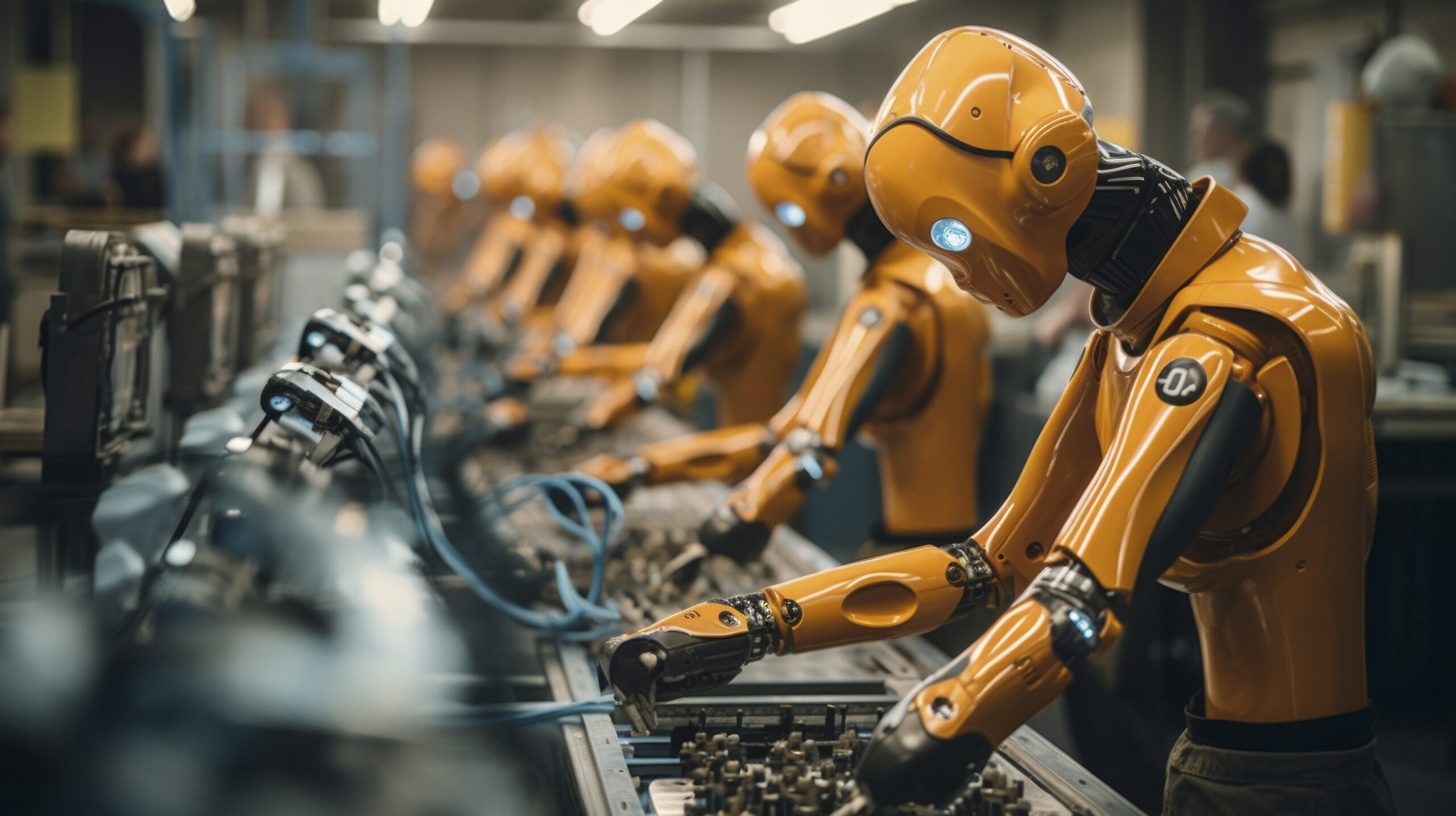
• Process Automation: Robots and AI systems streamline repetitive tasks with high precision.
• Data Analytics: Analyzing production data to improve efficiency and reduce waste.
Challenges
• High cost of implementation and integration.
• Data privacy and security concerns.
• Need for skilled AI engineers and technicians.
• Resistance to adopting AI-driven changes.
• Difficulty in integrating legacy systems with modern AI tools.
Future Scope
AI will continue to shape the next era of manufacturing—smart factories will operate autonomously, learning and adapting in real-time. Collaboration between AI and humans will drive innovation, ensuring greater flexibility, speed, and sustainability.
Conclusion
AI in manufacturing is more than automation—it’s the intelligence behind smarter production. By integrating AI technologies, industries can achieve higher efficiency, reduced downtime, and a significant competitive advantage in the global market.